 English



📅 May 2026 ⏱ 13 min read 🔖 Flours · Health Calculator · Diabetes & Nutrition
📋 In This Article
- Pakistan's Hidden Sugar Crisis — Why Your Atta Matters
- What Is the Glycemic Index? The Science Behind Multi Grain Atta for Sugar Patients
- Multi Grain Atta Glycemic Index vs. Standard Flour — Side by Side
- The 15 Super Grains — What Each One Does for Diabetics
- Zarfoni x Mughal Natural Foods — Our Distribution Partnership
- The Expert-Endorsed Dietary Framework for Sugar Patients
- Making the Switch — A Practical Guide for Pakistani Families
- Frequently Asked Questions
The Science of 15 Grains: Why Wheat-Free Atta is the New Standard for Sugar Control in Pakistan
Thirty-three million Pakistanis are currently living with Type 2 diabetes — making this the third-largest diabetic population on earth. For every diagnosed patient, an estimated 1.5 more remain completely unaware of their condition. The silent driver woven into this crisis is also the most visible item on every Pakistani dastarkhaan: roti.
The average Pakistani adult eats between 8 and 14 rotis per day. When those rotis are made from refined maida (GI: 85) or even standard whole-wheat atta (GI: 62–70), the cumulative glucose load across three meals, three hundred and sixty-five days a year, creates a state of chronic insulin overexertion. Over time, that is not just a blood sugar problem — it is a cardiovascular problem, a kidney problem, a nerve problem.
The solution is not to give up roti. The solution is to change what the roti is made from.
This article breaks down the science of why multi grain atta for sugar patients works — what the glycemic index actually means, how each of the 15 grains in Zarfoni's blend acts on your metabolism, and why going wheat-free is no longer optional for serious glycemic management in Pakistan.
|
🧮 FREE TOOL — CHECK YOUR DIABETES RISK Before reading further: if you have not yet checked your BMI or estimated your diabetes risk score, Zarfoni's free Health Calculator Suite does both in under two minutes — no sign-up required. |
1. Pakistan's Hidden Sugar Crisis — Why Your Atta Matters
Pakistan ranks #3 globally for diabetic population size — behind only China and India. According to the International Diabetes Federation (IDF), over 33 million Pakistanis have Type 2 diabetes, with projections suggesting this number will cross 50 million by 2045 if dietary trends continue unchanged.
What makes Pakistan's situation unique — and particularly alarming — is the South Asian metabolic threshold. Research published in the Lancet confirms that South Asians develop insulin resistance and cardiovascular complications at significantly lower BMI levels than Western populations. A Pakistani adult with a BMI of 23 already carries elevated metabolic risk. At BMI 25, the risk of Type 2 diabetes onset is clinically significant.
| Statistic | Figure | Context |
|---|---|---|
| Pakistanis with Type 2 Diabetes | 33 Million | IDF Diabetes Atlas 2025 |
| Pakistan's Global Rank | #3 | After China and India |
| GI of Standard Wheat Atta | 62 – 70 | Moderate-to-high; problematic for daily use |
| GI of Refined Maida | ~85 | High; causes rapid post-meal glucose spikes |
| Estimated GI of Zarfoni 15-Grain Atta | ~32 – 38 | Low GI; ingredient-weighted composite estimate |
|
⚠️ THE ROTI PROBLEM Standard maida has a GI of approximately 85. Even so-called "whole wheat" atta in Pakistan is frequently blended with maida to improve softness and texture — keeping the effective GI well above the safe threshold for sugar patients (GI ≤ 55). The problem is not roti. It is what the roti is made from. |
2. What Is the Glycemic Index? The Science Behind Multi Grain Atta for Sugar Patients
The Glycemic Index (GI) is a scale from 0 to 100 that measures how quickly a carbohydrate-containing food raises blood glucose after eating, relative to pure glucose (GI = 100). The classifications are:
- Low GI (55 and below): Slow glucose release — safe and recommended for diabetics
- Medium GI (56 – 69): Moderate glucose release — use with caution in diabetic diets
- High GI (70 and above): Rapid glucose spike — should be minimised for sugar patients
But GI alone does not tell the full story. The reason a well-designed multi grain atta glycemic index is so dramatically lower than single-grain wheat flour comes down to four compounding mechanisms:
🔬 Mechanism 1 — The Fiber Matrix Effect
Soluble fibers from oats (beta-glucan), barley, and psyllium husk form a gel-like matrix in the digestive tract. This gel physically slows the movement of food through the intestine and blocks the rapid uptake of glucose across the intestinal wall. The result is a slower, flatter blood sugar curve after eating.
🔬 Mechanism 2 — Protein Buffering
Soyabean, quinoa, and black chickpeas contribute complete dietary proteins that slow gastric emptying — meaning food leaves the stomach more slowly, delaying the point at which carbohydrates reach the bloodstream for conversion into glucose.
🔬 Mechanism 3 — Omega-3 and Fatty Acid Modulation
Flaxseeds (alsi) and kalonji (black seed) provide Omega-3 fatty acids and thymoquinone respectively. These compounds work at the cellular level — enhancing insulin receptor sensitivity so that existing insulin can do its job more effectively.
🔬 Mechanism 4 — Micronutrient Activation
Magnesium — found abundantly in bajra and sorghum — is a co-factor in over 300 enzymatic reactions in the body, including glucose metabolism and insulin signalling. Studies consistently show that diabetic patients have significantly lower magnesium levels than healthy controls. A magnesium-rich atta directly addresses this deficit.
3. Multi Grain Atta Glycemic Index vs. Standard Flour — Side by Side
| Flour Type | GI Score | Classification | Suitability for Sugar Patients |
|---|---|---|---|
| Refined Maida (White Flour) | 85 | HIGH | ❌ Avoid entirely |
| Standard Whole Wheat Atta | 69 | MEDIUM-HIGH | ⚠️ Limited use only |
| Makki ka Atta (Corn Flour) | 70 | HIGH | ⚠️ Use sparingly |
| Barley Flour (Jau ka Atta) | 28 | LOW | ✅ Excellent choice |
| Black Chickpea Flour (Kala Chana) | 28 | LOW | ✅ Excellent choice |
| Zarfoni 15-Grain Wheat-Free Atta* | ~32–38 | LOW | ✅ ✅ Designed for sugar patients |
*Estimated composite GI based on ingredient-weighted averages across all 15 components. Individual glycemic response may vary based on preparation method and portion size.
|
💪 IS YOUR BMI IN THE DANGER ZONE? High BMI is the single strongest predictor of Type 2 diabetes in South Asian adults — at BMI thresholds lower than Western benchmarks. Use Zarfoni's free Health Calculator to check your BMI, assess your diabetes risk score, and understand what dietary changes could mean for your long-term metabolic health. |
4. The 15 Super Grains — What Each One Does for Sugar Patients
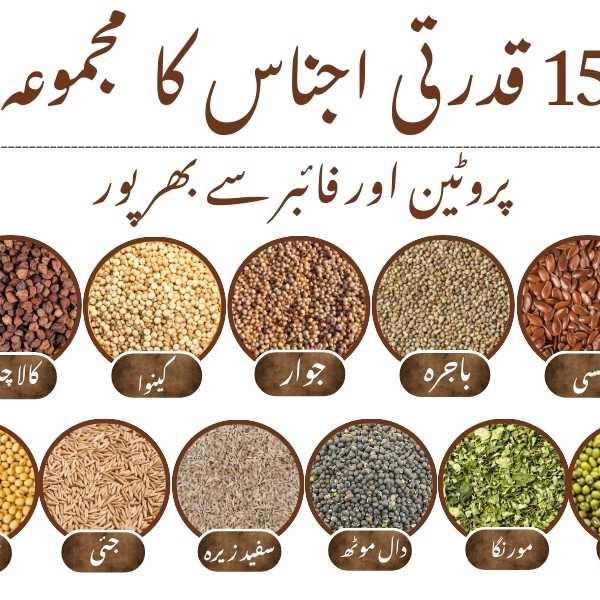
Not all multigrain products are equal. The defining difference between a product that calls itself "multigrain" and Zarfoni's 15-Grain Wheat-Free Atta by Mughal Natural Foods is specificity: every single ingredient has a documented, evidence-backed mechanism of action for metabolic and glycemic health. Here is the full breakdown:
| # | Grain / Seed | GI Level | Key Mechanism for Sugar Patients |
|---|---|---|---|
| 1 | Barley (Jau) | GI: 28 — Low | Beta-glucan fiber forms a viscous gel in the gut; clinically shown to reduce post-meal glucose spikes by up to 30% and lower HbA1c over time. |
| 2 | Oats (Jai) | GI: 42 — Low | Soluble beta-glucan slows gastric emptying; reduces LDL cholesterol and extends satiety — critical for weight management in diabetic patients. |
| 3 | Sorghum (Jowar) | GI: 55 — Low | Tannins in the bran inhibit digestive enzyme activity, slowing starch breakdown; rich in antioxidants that reduce oxidative stress in diabetic patients. |
| 4 | Pearl Millet (Bajra) | GI: 54 — Low | High magnesium content supports insulin receptor sensitivity; iron-rich; provides sustained energy without the glucose spike of refined grains. |
| 5 | Black Chickpeas (Kala Chana) | GI: 28 — Low | Resistant starch acts as prebiotic fiber; significantly slows digestion and improves gut microbiome diversity — a key factor in long-term insulin response. |
| 6 | Finger Millet (Ragi) | GI: 54 — Low | High in polyphenols that inhibit alpha-amylase — the key digestive enzyme that converts starch into glucose in the gut. Exceptionally high in calcium for bone health. |
| 7 | Buckwheat | GI: 49 — Low | Contains D-chiro-inositol, a compound shown to amplify insulin signal transduction at the cellular level. 100% wheat-free (it is a seed, not a grain). |
| 8 | Soyabean | GI: 15 — Very Low | Isoflavones improve cellular insulin sensitivity; the high complete protein content buffers carbohydrate absorption, creating a dual glycemic-dampening effect. |
| 9 | Flaxseeds (Alsi) | GI: 32 — Low | Mucilage fiber and ALA Omega-3s reduce inflammatory markers associated with insulin resistance; studies show regular consumption reduces glycated hemoglobin (HbA1c). |
| 10 | Psyllium Husk (Isabgol) | GI: <5 — Very Low | The most potent fiber in the blend. Forms a thick gel that physically traps glucose molecules, dramatically delaying and blunting the post-meal blood sugar curve. |
| 11 | Amaranth | GI: 55 — Low-Med | Complete protein with all 9 essential amino acids; reduces triglycerides and cholesterol — critical secondary metabolic markers in diabetic syndrome. |
| 12 | Maize (Makki) | GI: 52 — Low-Med | Whole-grain maize retains its fiber hull, moderating the digestion of its natural sugars. Rich in Vitamin B3 (niacin), which supports glucose metabolism pathways. |
| 13 | Brown Rice | GI: 50 — Low-Med | Significantly lower GI than white rice; provides magnesium and chromium — both essential minerals for glucose tolerance and insulin function. |
| 14 | Quinoa | GI: 53 — Low | One of few complete plant proteins. Its ecdysteroids (plant steroids) have been shown to enhance muscle glucose uptake independently of insulin — a unique dual-action benefit. |
| 15 | Kalonji (Black Seed) | GI: ~15 — Very Low | Thymoquinone, the active compound, has been shown to regenerate pancreatic beta cells and improve both insulin secretion and peripheral sensitivity. Recommended in hadith and backed by modern research. |
🌾 Highest Recommended
Zarfoni 15-Grain Wheat-Free Multigrain Atta
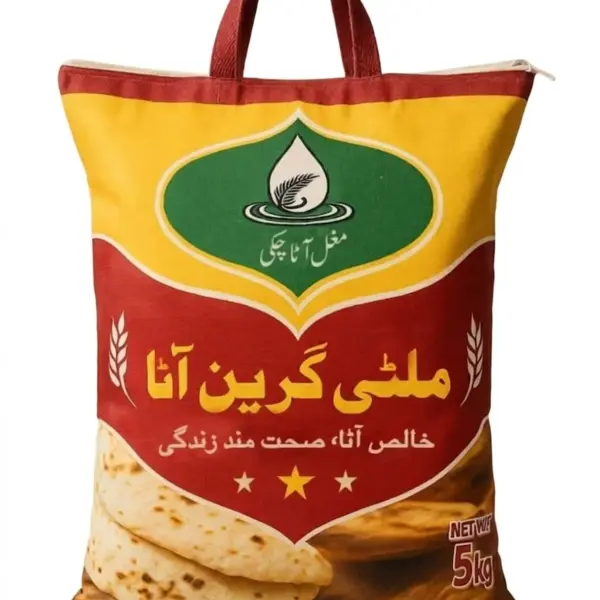
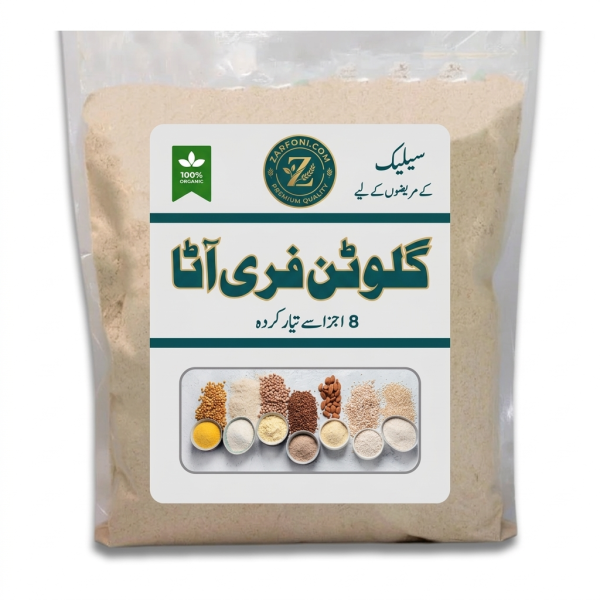
All 15 ingredients above, cold-milled together into a single synergistic blend by Mughal Natural Foods — Pakistan's most comprehensive flour for sugar control. Available in 2.5kg, 5kg, and 10kg packs. View Product →
GI mechanism: The combination of psyllium husk, barley beta-glucan, flaxseed mucilage, soyabean protein, and kalonji thymoquinone creates four compounding layers of glycemic protection — no single-grain or 3-grain atta can replicate this effect.
5. Zarfoni x Mughal Natural Foods — Our Authorised Distribution Partnership
A frequent question from customers: Where does this atta actually come from? The answer reflects Zarfoni's commitment to full transparency.
Zarfoni is an authorised distribution partner of Mughal Natural Foods for the 15-Grain Wheat-Free Multigrain Atta. This partnership means:
- 🌾 Sourcing: Mughal Natural Foods sources each of the 15 grains independently, ensuring single-origin purity for each ingredient rather than purchasing pre-mixed blends.
- ❄️ Cold-Milling: Mughal Natural Foods uses advanced cold-milling technology — meaning grains are ground without heat application, preserving all heat-sensitive bioactive compounds (thymoquinone from kalonji, lignans from flaxseed, beta-glucan from barley) that would be destroyed in conventional heat milling.
- 🔬 Lab Testing: Every batch is lab-tested for purity before dispatch. No chemical additives, no preservatives, no fillers, no wheat.
- 📦 Zarfoni's Role: We handle distribution, packaging to the Forest Gold standard, and direct-to-consumer delivery across Pakistan within 48–72 hours of milling.
|
❄️ WHY COLD-MILLING MATTERS FOR SUGAR PATIENTS Heat destroys the soluble fibers and denatures the bioactive compounds responsible for glycemic control. Thymoquinone (kalonji) is heat-sensitive. Lignans in flaxseeds degrade above 40°C. Beta-glucan integrity in barley is compromised by high-temperature milling. Cold-milling by Mughal Natural Foods preserves the full functional benefit of every one of the 15 grains — which is why this atta works where cheaper "multigrain" competitors do not. |
When you buy Zarfoni's 15-Grain Atta, you are receiving a product that carries both Mughal Natural Foods' sourcing integrity and Zarfoni's delivery and quality standards — end to end.
→ Order Zarfoni x Mughal Natural Foods 15-Grain Atta — from PKR 1,499
6. The Expert-Endorsed Dietary Framework for Sugar Patients in Pakistan
Following the dietary principles consistently discussed by leading Pakistani endocrinologists and clinical dietitians — including those affiliated with institutions like Shaukat Khanum Memorial Hospital, Aga Khan University Hospital (AKUH), and the Pakistan Endocrine Society (PES) — the evidence-based framework for dietary management of Type 2 diabetes converges on three non-negotiable principles. Zarfoni's 15-Grain Atta is specifically designed to address all three simultaneously with a single daily change:
📌 Principle 1 — Prioritise Low-GI Staples at Every Meal
Clinical guidance from the PES and WHO-SEARO consistently identifies staple food replacement — switching from high-GI grains to low-GI alternatives — as the single highest-impact dietary intervention for blood glucose management. Given that roti is consumed 3 times daily in most Pakistani households, switching atta is the most leverage-efficient dietary change available.
📌 Principle 2 — Achieve 25–38g of Dietary Fiber Daily
The WHO recommends 25–38 grams of dietary fiber per day for adults. Most Pakistanis consume fewer than 12 grams. Two rotis made from Zarfoni 15-Grain Atta deliver approximately 8–10 grams of dietary fiber from the psyllium husk, flaxseed, barley beta-glucan, and oat content alone — making meaningful progress toward this target with every meal.
📌 Principle 3 — Eliminate Wheat Gluten When Metabolically Compromised
Emerging research links wheat gluten to systemic inflammation in metabolically compromised individuals — even those without celiac disease. Chronic inflammation is both a cause and an accelerator of insulin resistance. The 100% wheat-free formulation of this atta removes this inflammatory variable from the diet entirely, reducing the inflammatory burden on the digestive and immune systems.
📌 Principle 4 — Address the Magnesium Deficiency Endemic in Pakistani Diabetics
Studies show that magnesium deficiency is present in up to 48% of Type 2 diabetic patients. Magnesium is essential for insulin secretion and glucose transport. The 15-grain blend — particularly bajra, sorghum, and quinoa — provides bioavailable magnesium through dietary food rather than supplementation, which clinical evidence shows is the more effective delivery mechanism.
|
⚖️ HIGH BMI? CHECK YOUR DIABETES RISK NOW High BMI is the leading modifiable risk factor for Type 2 diabetes in South Asian populations — at BMI thresholds lower than Western benchmarks. If your BMI is above 23, your dietary staple choices carry real clinical weight. Use Zarfoni's free Health Calculator to check your current BMI, estimate your diabetes risk level, and understand what your numbers mean for your daily food plan. |
7. Making the Switch — A Practical Guide for Pakistani Families
Transitioning to a low-GI multigrain atta does not mean abandoning the foods you love. Zarfoni's 15-Grain Atta by Mughal Natural Foods is formulated to behave like traditional atta in the kitchen while performing radically differently in the bloodstream. Here is a practical guide for Pakistani families:
🔄 Transition Tips (Weeks 1–2)
For families accustomed to fine-textured soft rotis, a brief adjustment period of 7–10 days is normal. Multigrain atta is denser and earthier in flavour — this is the fiber content working as intended.
- Start with a 50/50 blend of Zarfoni 15-Grain Atta with your current atta for the first week
- Move to 75/25 in week 2, then 100% by week 3
- Use warm water (not cold) for kneading to maintain fiber integrity
- Add 1–2 teaspoons of extra ghee or oil to the dough for the first few batches
- Expect rotis to be slightly thicker and more filling — most patients naturally eat 1–2 fewer rotis per meal
🍽️ Best Pairing Strategy for Maximum Glycemic Control
Following the guidance of Pakistani clinical nutritionists, pair your 15-grain roti with:
- Protein-forward dishes: Daal, chana, or meat-based sabzis compound the protein buffering effect of the atta's soyabean and quinoa, lowering the overall glycemic response of the entire meal.
- Non-starchy vegetables: Karela (bitter melon), methi, spinach, and lauki are particularly synergistic with low-GI atta for blood sugar management.
- Healthy fats: Zarfoni Cold-Pressed Sarson Oil adds Omega-3 fatty acids that complement the flaxseed content of the atta for compounded insulin sensitivity.
- Avoid pairing with: White rice, sugary desserts, or refined bread at the same meal — these defeat the purpose of a low-GI atta.
📦 Available Sizes from Zarfoni x Mughal Natural Foods
| Pack Size | Best For | Price | Order |
|---|---|---|---|
| 2.5 kg | Trial / Small household (1–2 persons) | PKR 1,499 | Order Now → |
| 5 kg | Family of 3–4 (monthly supply) | Check site for current price | Order Now → |
| 10 kg | Large family / subscription use | Check site for current price | Order Now → |
📦 Delivered freshly milled across Pakistan — Karachi, Lahore, Islamabad, and all major cities — within 48–72 hours. Call or WhatsApp: 03144327451
8. Frequently Asked Questions
Is multi grain atta good for all types of diabetes?
Low-GI multigrain atta is particularly effective for Type 2 diabetes management, where diet is a primary intervention lever. For Type 1 diabetics who use insulin, switching to a low-GI atta reduces the insulin-to-carbohydrate ratio needed per roti, enabling more stable dosing. Always consult your endocrinologist before making significant dietary changes alongside insulin therapy or oral hypoglycemic medication.
What is the glycemic index of Zarfoni's 15-Grain Multigrain Atta?
Based on the ingredient-weighted GI averages of all 15 components — including barley (GI: 28), black chickpeas (GI: 28), psyllium husk (GI: <5), soyabean (GI: 15), and flaxseeds (GI: 32) — the estimated composite GI is approximately 32–38. This places it firmly in the "low GI" category (below 55). The cold-milling process by Mughal Natural Foods also preserves the fiber integrity that would otherwise be degraded in heat-milled products, supporting real-world glycemic performance even better than theoretical estimates.
Can a sugar patient eat roti daily using this atta?
Yes — and this is one of the most important benefits of low-GI multigrain atta for Pakistani patients. Roti is culturally non-negotiable; forbidding it leads to poor dietary adherence. By lowering the GI of the atta itself, patients can continue eating roti daily while managing post-meal blood glucose effectively. Most clinical dietitians in Pakistan recommend 2–3 rotis per meal for diabetics using a certified low-GI atta.
What is the difference between "wheat-free" and "gluten-free" atta?
All wheat-free attas are gluten-free, but not all gluten-free attas are wheat-free. "Gluten-free" can be achieved by using de-glutened wheat starch — which still carries wheat's starch structure and GI profile. "Wheat-free" means the product contains no wheat whatsoever. For sugar patients, this distinction matters: even de-glutened wheat has a higher inherent GI than the low-GI grains (barley, chickpeas, flaxseeds) that replace it in a 100% wheat-free blend.
Is Zarfoni an authorised distributor of Mughal Natural Foods?
Yes. Zarfoni is the authorised distribution partner of Mughal Natural Foods for this 15-Grain Wheat-Free Multigrain Atta. Mughal Natural Foods handles sourcing, cold-milling, and lab testing. Zarfoni handles distribution, packaging, and delivery to customers across Pakistan. When you order from zarfoni.com, you receive a product that has passed Mughal Natural Foods' quality standards and Zarfoni's packaging and freshness protocols.
How long before I see results from switching to multigrain atta?
Most sugar patients report noticeably lower post-meal glucose readings within the first 1–2 weeks of consistent use. HbA1c improvements — a longer-term measure of average blood glucose — typically become measurable at the 3-month mark. Combined with other dietary changes (reduced refined carbohydrates, increased protein, regular walking), the effect compounds significantly. Use Zarfoni's Health Calculator to track your BMI and risk score at baseline and again at 3 months.
|
ZARFONI × MUGHAL NATURAL FOODS 15-Grain Wheat-Free Multigrain Atta Pakistan's most comprehensive flour for sugar control. 100% wheat-free · Lab-tested · Cold-milled by Mughal Natural Foods · Delivered in 48–72 hrs |
🧮 Free Health Calculator · 🌾 All Zarfoni Flours · Barley Flour (Jo ka Atta) · 📦 All Products
— Published by Zarfoni.com — Authorised Distributor of Mughal Natural Foods —
Pakistan's Natural & Wholesome Food Destination · Pure · Cold-Milled · Lab-Tested · Wheat-Free
📞 03144327451 · support@zarfoni.com
This article is for educational and informational purposes only. It does not constitute medical advice. Persons managing diabetes should consult a qualified endocrinologist or clinical dietitian before making significant dietary changes.