 English



Flours · Health Calculator · Diabetes & Nutrition
📋 In This Article
- Why People Try to Make Multigrain Atta at Home — And Why It Makes Sense
- The Free 5-Grain DIY Recipe (With Exact Ratios)
- The 7 Things That Go Wrong With DIY Multigrain Atta
- The Ratio Science: Why Getting It Wrong Raises, Not Lowers, Your Glucose
- The Real Cost of DIY: A Honest Breakdown
- The 10-Ingredient Gap: What a 5-Grain Blend Cannot Do
- The Zarfoni x Mughal Natural Foods Solution
- Frequently Asked Questions
The Perfect Multi Grain Atta Ratio: Why DIY Mixing Might Be Risking Your Glucose Levels
If you landed on this page, you are probably a careful person. Someone who has looked at the ingredients list on a standard atta bag, researched what barley and psyllium husk actually do, and decided: "Why pay someone else to mix grains? I can do this myself."
That instinct is correct — and it is exactly the right instinct. The willingness to learn the science of how to make multi grain atta at home and control exactly what goes into your family's roti is a genuinely healthy impulse. This article will respect that fully. We will give you a real, working, evidence-backed multi grain atta ingredients ratio for a 5-grain home blend — no teaser, no paywall.
But we will also walk you through, honestly and specifically, the seven variables that most home blenders get wrong — and how each one can silently raise post-meal glucose levels instead of lowering them. Because the goal here is not to sell you something. The goal is for you to have the best possible blood sugar outcomes. If that means making your own atta, this guide will help you do it correctly. If the science leads you to conclude that a precision-milled 15-grain professional blend is the more reliable path — that is a conclusion you will reach on your own terms, with full information.
|
🧮 BEFORE YOU BLEND: KNOW YOUR BASELINE Whether you are making your own multigrain atta or buying a precision blend, your starting point matters. Use Zarfoni's free Health Calculator to establish your current BMI and estimated diabetes risk score — then track how your glucose outcomes improve over 8–12 weeks as your atta quality improves. |
1. Why People Try to Make Multigrain Atta at Home — And Why It Makes Sense
The search for how to make multi grain atta at home is one of the most honest searches a person can make. It signals three things about the person making it:
- They have done enough research to know that not all multigrain products are equal
- They suspect that commercial "multigrain" brands may be using low-cost grain ratios that do not actually achieve the glycemic benefits advertised
- They are willing to put in effort for better health outcomes
On all three counts, they are right. Pakistan's retail market for multigrain atta has a significant credibility problem. Several commercially available products label themselves "multigrain" while using 80–90% wheat as the base flour with token additions of other grains — producing a product with a glycemic index barely different from standard atta. The distrust is warranted.
Making your own blend, with grains you sourced yourself, is a legitimate approach to this problem. The question is not whether to do it, but how precisely — because the margin between a home blend that works and one that does not is thinner than most people expect.
|
⚠️ THE KEY INSIGHT BEFORE YOU START A multigrain atta's glycemic index is not the average of its ingredients' individual GI scores. It is determined by how those ingredients interact — the ratios between them, the particle size uniformity of the grind, and the bioavailability of specific compounds at specific proportions. This is why a home blend with the right ingredients can still produce the wrong glucose response if the ratios or milling are off. |
2. The Free 5-Grain DIY Recipe (With Exact Ratios)
Here is a genuinely effective 5-grain home blend — the best starting point for anyone learning how to make multi grain atta at home. These ratios are based on published nutritional research and the clinical recommendations of South Asian diabetes dietitians. This is a real recipe that will produce real glycemic improvement over standard wheat atta.
|
🌾 THE ZARFONI 5-GRAIN HOME BLEND — REFERENCE RECIPE A working recipe, shared freely. Print and keep it. |
The 5-Grain Mixing Ratio (per 1 kg total)
| Grain | Weight | % of Blend | GI Score | Why This Ratio |
|---|---|---|---|---|
| Barley (Jau) | 320g | 32% | 28 | Highest single GI-lowering component. Beta-glucan needs to be the dominant fiber source — below 25%, the effect diminishes measurably. |
| Pearl Millet (Bajra) | 250g | 25% | 54 | Provides bulk, magnesium, and iron. Makes the roti bindable and gives the dough structural integrity without wheat gluten. |
| Sorghum (Jowar) | 200g | 20% | 55 | Adds antioxidants and insoluble fiber. Complements barley's soluble fiber profile for a complete digestive fiber package. |
| Black Chickpeas (Kala Chana) | 150g | 15% | 28 | Plant protein that buffers carbohydrate absorption. Keeps the GI of the whole blend low. Do not go below 12% — the protein buffering effect drops sharply. |
| Psyllium Husk (Isabgol) | 80g | 8% | <5 | The GI anchor of the blend. Gelation slows glucose absorption across the gut wall. Critical: must not exceed 10% or roti becomes gummy and unworkable. |
Estimated Composite GI of This 5-Grain Blend: ~42–48
This places it in the low-GI category — a meaningful improvement over standard wheat atta (GI: 62–70) or refined maida (GI: 85). For a sugar patient making this at home and using it consistently, this blend will produce real, measurable improvement in post-meal glucose readings within 2–3 weeks.
Instructions for Home Preparation
- Source grains separately. Do not buy pre-mixed blends — you cannot verify the ratio. Purchase each grain individually from a trusted source and weigh them on a kitchen scale.
- Clean and sun-dry. Spread each grain on a clean cloth in direct sunlight for 2–3 hours to reduce moisture content. High moisture causes rancidity within days of milling.
- Grind cold. Take to a local chakki (stone mill) and request fine grinding at low RPM. Tell the miller not to run at high speed — heat degrades the beta-glucan in barley and the mucilage in psyllium husk. This is the single most important instruction.
- Store correctly. Transfer immediately to an airtight container. Refrigerate in summer. Multigrain flour has a much shorter shelf life than wheat flour — consume within 3 weeks of milling.
- Adjust dough hydration. This blend absorbs significantly more water than wheat atta. Add water gradually — expect to use 15–20% more water than you would for a standard wheat roti dough.
This is a genuinely effective recipe. Use it, and use it well. But before you commit to sourcing all five grains monthly and making multiple chakki trips, read the next section — because there are seven variables that regularly undermine even well-intentioned home blends.
3. The 7 Things That Go Wrong With DIY Multigrain Atta
This is not a list of scare tactics. These are documented, specific failure points that anyone working with a multi grain atta mixing ratio at home will eventually encounter — usually without knowing which variable is the culprit when their glucose readings do not improve the way they expected.
Problem 1 — You Cannot Verify Grain Purity
When you buy barley from a local kirana store or a mandi, you are buying a commodity product with no certification of purity, species, or growing conditions. In Pakistan's supply chain, barley is frequently adulterated with low-grade wheat or sorghum. This matters enormously because the beta-glucan content of barley varies by up to 40% between varieties — and beta-glucan is the single compound responsible for barley's exceptional GI-lowering effect. If your barley is a low-beta-glucan variety or adulterated with cheaper grain, the cornerstone of your blend is compromised without your knowledge.
|
🔬 THE BETA-GLUCAN ISSUE Lab-tested barley from certified sources contains 3.5–6.2% beta-glucan by weight. Generic market barley in Pakistan typically tests at 1.8–2.5%. At those lower concentrations, the clinical benefit — the very reason you are adding barley — is significantly reduced. You are still getting some benefit, but not the effect you are designing around. |
Problem 2 — The Milling Temperature Problem
Most local chakkis in Pakistan run at 1400–1800 RPM to serve high volumes of customers quickly. At these speeds, the friction between grinding stones raises the temperature of the flour to 45–65°C during the milling process. This matters critically for three of the five grains in the basic recipe:
- Barley beta-glucan begins to degrade structurally above 40°C
- Psyllium husk mucilage (the compound that gels and slows glucose absorption) loses viscosity when heated during milling
- Black chickpea protein undergoes partial denaturation above 50°C, reducing its buffering effect on carbohydrate digestion
The result: you have a flour with the correct ingredients in the correct ratios, but the active compounds that make those ingredients work have been partially or fully deactivated during the milling process. Your glucose readings will be better than standard atta — but not as good as a properly cold-milled version of the same recipe.
Problem 3 — Ratio Drift Over Time
Weighing grains on a kitchen scale every month sounds simple. In practice, most households do it correctly the first time and then begin estimating — "roughly 3 katoris of barley, 2 of bajra..." — within 2–3 cycles. The problem is that the GI-lowering effect of this blend is non-linear: it requires the fiber and protein components (barley, chickpeas, psyllium husk) to remain above threshold concentrations. A 5% drift in the barley proportion, for example, meaningfully changes the beta-glucan density of the final flour. Over months of estimation, the blend quietly loses its glycemic benefit while appearing identical.
Problem 4 — Psyllium Husk Clumping
Psyllium husk is hygroscopic — it absorbs moisture from the air extremely readily. If it is not stored perfectly dry before milling, or if it picks up any humidity during the milling or blending process, it begins to pre-gel. When pre-gelled isabgol is mixed into the other flours, it creates an uneven distribution in the final blend — pockets of high isabgol concentration and areas with very little. The rotis from the high-isabgol pockets are gummy and unworkable; the rotis from the low-isabgol areas lose the GI-lowering benefit. Industrial cold-milling equipment controls for this through temperature and humidity-controlled environments that no home kitchen or standard chakki can replicate.
Problem 5 — Shorter Shelf Life and Rancidity Risk
Whole-grain and high-fat ingredient flours (particularly flaxseed, if you try to add it) go rancid significantly faster than refined wheat flour. The oils in ground flaxseed, for example, oxidise within 5–7 days at room temperature. Rancid fats do not just taste bad — oxidised lipids are pro-inflammatory compounds that actively worsen the metabolic inflammation that drives insulin resistance. A 3-week-old home-ground multigrain flour stored in a kitchen cupboard in Lahore's summer heat may actually be metabolically worse than standard wheat atta because of the rancidity factor. Proper cold storage and nitrogen-flushed packaging — the kind used in industrial milling — are the only reliable solutions.
Problem 6 — The Sourcing Cost and Time Tax
Sourcing five clean, certified grains from separate vendors, cleaning them, drying them, weighing them, and making a chakki trip is a meaningful time commitment — typically 3–4 hours every 3–4 weeks for a family of four. That is a non-trivial investment of a resource that most Pakistani households — particularly those managing a family member's diabetes — are already short on. The cost of that time deserves to be factored into the honest comparison.
Problem 7 — You Hit the 5-Grain Ceiling
And this is the most important one. Even a perfectly sourced, perfectly weighed, perfectly cold-milled 5-grain blend has an estimated composite GI of 42–48. That is genuinely good — a meaningful improvement. But it cannot go lower, because the mechanisms that push a blend below GI 40 require additional ingredients that are impractical to source and blend at home: specifically, the insulin-sensitising action of kalonji thymoquinone, the cellular glucose uptake enhancement of quinoa ecdysteroids, the HbA1c reduction linked to flaxseed lignans, and the D-chiro-inositol effect of buckwheat. These are the ingredients that take a GI-42 blend to GI-32 — and that difference, compounded over three meals a day, is clinically significant for a sugar patient.
4. The Ratio Science: Why Getting It Wrong Raises, Not Lowers, Your Glucose
The most counterintuitive finding in multigrain atta research is this: adding more low-GI grains does not always lower the GI of the blend. At certain concentrations and ratios, ingredients begin to interfere with each other's mechanisms — and the glycemic outcome of the whole blend becomes unpredictably worse than the sum of its parts.
Here are three specific ratio errors that regularly occur in home blending:
❌ Ratio Error 1: Too Much Psyllium Husk (above 12%)
At concentrations above 10–12%, psyllium husk over-gels the digestive contents. Instead of slowing glucose absorption beneficially, this creates delayed gastric emptying that causes a delayed — but still sharp — glucose spike 3–4 hours after eating instead of the expected 1–2 hours. For a diabetic patient who is monitoring post-meal readings at the standard 2-hour mark, this spike is invisible, while the metabolic damage continues.
❌ Ratio Error 2: Too Little Protein Component (below 12% legume content)
The protein-buffering mechanism — where dietary protein slows gastric emptying and reduces the rate of carbohydrate absorption — requires legume content (black chickpeas, soyabean, or equivalent) to be at a minimum threshold of 12% by weight. Below this level, the protein buffering effect is negligible. Many home blenders use kala chana in small quantities as an "add-on" rather than as a structural component of the blend, effectively wasting its contribution.
❌ Ratio Error 3: Uneven Particle Size
This is the ratio error nobody talks about: if different grains are milled to different particle sizes — which is almost inevitable at a general-purpose local chakki — the coarser grains settle to the bottom of the flour container and the finer ones rise to the top. The first rotis made from each batch use predominantly the fine-milled components; the last rotis use the coarser material. The glycemic index of those two rotis from the same bag of flour can differ by 8–12 GI points. Uniform particle size requires controlled industrial milling — not because chakki mills are bad, but because they are designed for single-grain milling, not precision multi-grain blending.
| Variable | Home Blend Risk | Effect on Glucose Response |
|---|---|---|
| Grain purity / adulteration | High — no way to verify | Beta-glucan deficit → higher post-meal spike |
| Milling temperature | High — standard chakkis generate heat | Degraded beta-glucan and mucilage → slower GI improvement |
| Ratio drift over time | Very high — manual estimation creeps in | Below-threshold fiber → glycemic benefit diminishes |
| Psyllium husk moisture | Medium — seasonal humidity variable | Uneven gel distribution → inconsistent glucose response per roti |
| Rancidity (if flaxseed added) | High — no cold storage infrastructure | Oxidised fats → pro-inflammatory → worsens insulin resistance |
| Particle size uniformity | High — general-purpose mill | Settling stratification → GI varies 8–12 points per roti |
|
⚖️ HIGH BMI RAISES YOUR STAKES HERE South Asian adults develop insulin resistance at BMI 23 — significantly below the Western threshold of 25. If your BMI is above 23, inconsistency in your atta's glycemic profile is not just a minor inconvenience; it is a clinically meaningful variable. Know your number before you optimise your diet. Zarfoni's free Health Calculator gives you your BMI and diabetes risk level in under two minutes. |
5. The Real Cost of DIY: An Honest Breakdown
One of the strongest arguments for home blending is cost. It feels cheaper to buy raw grains than finished flour. Let us run the actual numbers, honestly, for a family of four that consumes approximately 2.5 kg of multigrain atta per month.
| DIY Cost Component | Detail | Est. Monthly Cost (PKR) |
|---|---|---|
| Certified barley (800g) | From a quality supplier, not commodity kirana grade | ~420 |
| Bajra (625g) | Clean, stone-free, sun-dried | ~180 |
| Jowar (500g) | Whole grain, not pre-ground | ~200 |
| Kala Chana (375g) | Whole black chickpeas, not split | ~210 |
| Psyllium Husk / Isabgol (200g) | Food-grade, not pharmacy-grade (lower purity) | ~380 |
| Chakki milling cost | Specialist low-RPM mill, if you can find one | ~150–300 |
| Transport, time, storage containers | Monthly sourcing trip + packaging | ~200 |
| Wastage (5–8% typical) | Cleaning losses, mill residue, spoilage | ~120 |
| Total DIY Monthly Cost (2.5 kg) | PKR 1,860 – 2,010 |
Compare this to: Zarfoni x Mughal Natural Foods 15-Grain Atta — PKR 1,499 for 2.5 kg
The DIY 5-grain version costs more, takes 3–4 hours monthly, and delivers a less comprehensive formula. The 15-grain precision blend costs less, takes zero preparation time, and includes ten additional ingredients with clinically documented benefits that the 5-grain version cannot replicate.
This is not a sales argument. This is arithmetic.
6. The 10-Ingredient Gap: What a 5-Grain Blend Cannot Do
Even a perfect 5-grain DIY blend — correctly sourced, correctly rationed, correctly cold-milled — has a hard ceiling on its glycemic and metabolic performance. That ceiling exists because certain mechanisms require specific ingredients that simply are not available in a 5-grain recipe.
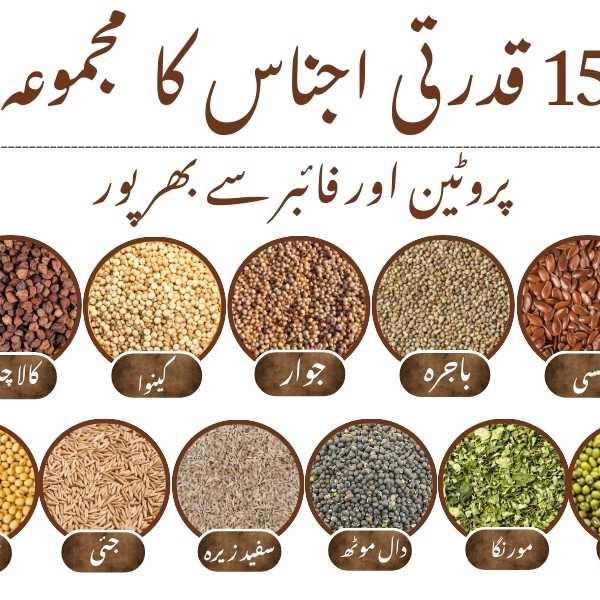
Here are the 10 additional ingredients in the Zarfoni x Mughal Natural Foods 15-Grain Atta that your DIY blend cannot include — and the specific, documented benefit each one provides that your blend is missing:
| # | Ingredient | What Your 5-Grain Blend Is Missing | Why It Cannot Be Added at Home |
|---|---|---|---|
| 6 | Finger Millet (Ragi) | Alpha-amylase inhibition — reduces starch-to-glucose conversion in the gut itself. Unique mechanism not covered by any of the 5 base grains. | Can be added, but requires precise ratio calibration with jowar — too much ragi raises astringency and affects roti texture significantly. |
| 7 | Buckwheat | D-chiro-inositol — amplifies insulin signalling at the cellular receptor level. No other grain in the 5-grain recipe provides this mechanism. | Buckwheat flour is rarely available in pure form in Pakistan markets; most commercial buckwheat is mixed with wheat. Sourcing pure buckwheat requires specialist suppliers. |
| 8 | Soyabean | Complete protein with isoflavones that improve insulin sensitivity. The 5-grain recipe's kala chana provides protein but not isoflavones — a different and additive mechanism. | Soyabean must be roasted and defatted before inclusion — a processing step requiring equipment beyond a standard chakki. |
| 9 | Flaxseeds (Alsi) | ALA Omega-3s and lignans that reduce HbA1c — the 3-month average glucose marker. The most important ingredient for long-term diabetic management beyond post-meal spikes. | Ground flaxseed goes rancid within 5–7 days at room temperature. Without refrigerated nitrogen-flushed storage, it becomes pro-inflammatory — the opposite of the intended effect. |
| 11 | Amaranth | Complete amino acid profile including all 9 essential amino acids. Reduces triglycerides — a critical secondary metabolic marker in diabetic syndrome that no grain in the 5-grain blend addresses. | Amaranth sourcing in Pakistan is limited; market availability is inconsistent and purity is difficult to verify. |
| 12 | Maize (Makki) | Niacin (Vitamin B3) and lutein. Niacin directly supports the NAD+ pathways that regulate glucose metabolism at the cellular energy level. | Can be added. However, whole-grain makki is high-starch and must be precisely balanced against the legume and fiber components — adding it freely raises the blend GI. |
| 13 | Brown Rice | Chromium — the mineral most depleted in Type 2 diabetics. Chromium enhances the action of insulin at the receptor level. No grain in the 5-grain recipe provides meaningful chromium. | Can be added, but brown rice flour is hygroscopic and degrades the shelf life of the blend significantly. |
| 14 | Quinoa | Ecdysteroids that enhance muscle glucose uptake independently of insulin — meaning muscles can absorb glucose without waiting for an insulin signal. A unique mechanism that reduces post-meal circulating glucose via a non-insulin pathway. | Quinoa is expensive; sourcing certified non-adulterated quinoa in Pakistan is challenging. It also requires specific milling conditions to avoid releasing bitter saponins. |
| 15 | Kalonji (Black Seed) | Thymoquinone — the only compound in any dietary food shown to support pancreatic beta cell regeneration. For a sugar patient, protecting and supporting the insulin-producing cells is as important as managing glucose levels. No substitute exists for this mechanism. | Kalonji must be used at precise concentrations (too much is unpalatable and can cause digestive discomfort). The active compound thymoquinone is heat-sensitive — destroyed by standard chakki milling temperatures. |
|
🌾 THE COMPOUND EFFECT Each of these 10 additional ingredients addresses a different, specific mechanism of metabolic dysfunction. They are not redundant additions — they are ten separate interventions delivered simultaneously in every roti. The estimated composite GI of the 15-grain blend (~32–38) is lower than the 5-grain blend (~42–48) precisely because these additional mechanisms create layers of glycemic protection that do not overlap with the base five grains' effects. |
7. The Zarfoni x Mughal Natural Foods Solution
If you have read this far, you have done more research into multigrain atta than 99% of people searching for this topic. You understand the ratio science, the milling variables, and the compound mechanisms. You are exactly the right person to understand why the following is not marketing language — it is a technical specification.
The Zarfoni x Mughal Natural Foods 15-Grain Wheat-Free Multigrain Atta solves every one of the seven DIY problems listed above:
| DIY Problem | How Mughal Natural Foods Solves It |
|---|---|
| Grain purity / adulteration | Every grain sourced individually from verified suppliers. Lab-tested for purity before processing. Certificate of analysis available per batch. |
| Milling temperature | Advanced cold-milling technology — grain temperature controlled below 35°C throughout the entire grinding process. Beta-glucan, mucilage, and thymoquinone integrity fully preserved. |
| Ratio drift | Each batch is precision-weighed on industrial scales to ±0.5% accuracy before milling. No estimation, no drift, every bag identical. |
| Psyllium husk moisture | Humidity-controlled processing environment. Isabgol is blended dry and encapsulated by cold-milled grain particles — preventing pre-gelation during processing and storage. |
| Rancidity risk | Nitrogen-flushed Forest Gold packaging eliminates oxidation. Shelf life 90 days from milling, without refrigeration. Zero added preservatives — the packaging does the work. |
| Particle size uniformity | Multi-stage milling with particle size classification. All 15 grains milled to a uniform micron range — no settling stratification, consistent GI from first roti to last. |
| The 5-grain ceiling | Ten additional precision-dosed ingredients that address mechanisms your 5-grain blend cannot reach — particularly kalonji thymoquinone, buckwheat D-chiro-inositol, flaxseed lignans, and quinoa ecdysteroids. |
🌾 Highest Recommended
Zarfoni 15-Grain Wheat-Free Multigrain Atta (by Mughal Natural Foods)
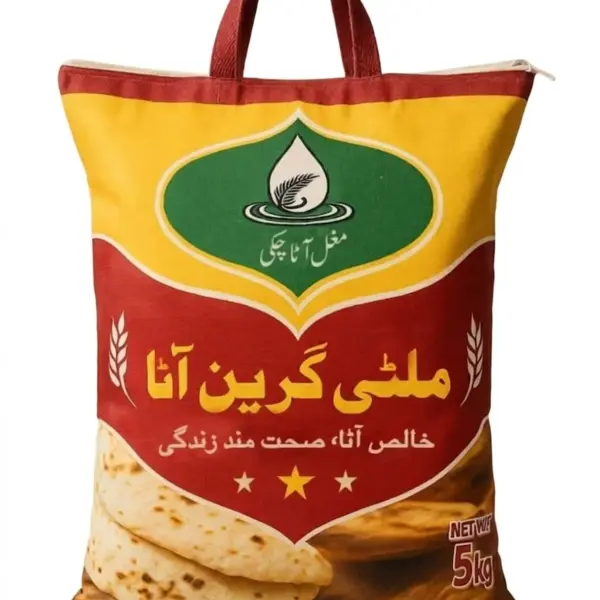
Pakistan's most comprehensive flour for sugar control. 100% wheat-free, lab-tested, cold-milled to preserve all 15 active grain compounds. Available in 2.5 kg, 5 kg, and 10 kg packs.
Estimated composite GI: ~32–38 — vs. ~42–48 for a well-made 5-grain home blend, vs. 62–70 for standard wheat atta.
Also recommended for pairing with this atta:
- Zarfoni Barley Flour (Jo ka Atta) — if you want to further increase the beta-glucan content of your rotis by blending 20% barley flour into the 15-grain atta
- Cold-Pressed Sarson Oil — to add Omega-3 fatty acids through the cooking fat, compounding the flaxseed Omega-3 in the atta
- Kala Chana Atta — if your doctor has advised maximum protein content in your diet for weight management alongside diabetes control
|
📊 TRACK YOUR PROGRESS WITH THE ZARFONI HEALTH CALCULATOR Whether you choose to make your own atta or switch to the 15-grain precision blend, your glucose improvement needs a benchmark to be meaningful. Use Zarfoni's free Health Calculator to record your current BMI and health metrics today — then re-run it in 12 weeks to measure the dietary impact. If your BMI shows High or your Diabetes Risk score is elevated, the difference between a GI-42 home blend and a GI-35 precision blend is not academic — it is a meaningful daily metabolic variable that compounds over months and years. |
8. Frequently Asked Questions
What is the best multi grain atta mixing ratio for diabetes at home?
The best evidence-based 5-grain home ratio for a diabetic patient is: Barley 32%, Bajra 25%, Jowar 20%, Kala Chana 15%, Isabgol 8%. This produces an estimated composite GI of 42–48 — a meaningful improvement over standard wheat atta. However, the accuracy of this benefit depends entirely on grain purity, cold milling, and consistent weighing, all of which are difficult to guarantee at home. See Section 2 for the full recipe and Section 3 for the variables that most commonly compromise home blends.
Can I just add isabgol to my regular atta to lower the GI?
Yes, and this is actually a reasonable interim step. Adding 5–8% isabgol (by weight) to standard atta reduces its GI meaningfully and adds significant soluble fiber. However, the benefit is limited to isabgol's single mechanism (fiber gel slowing glucose absorption) and does not address the protein buffering, insulin sensitisation, or micronutrient deficiencies that a full multigrain blend addresses. Use it as a stepping stone, not a final solution.
How do I know if my local chakki is cold-milling or heat-milling?
Ask the miller to check the temperature of the flour immediately after grinding using a food thermometer. Cold-milling keeps flour temperature below 35–40°C. Standard high-speed chakkis produce flour at 50–65°C. If the miller does not know or cannot measure, assume heat-milling and factor in the beta-glucan and mucilage degradation discussed in Section 3.
Is the multi grain atta ingredients ratio the same for weight loss and diabetes?
The ratio requirements overlap significantly but not completely. For diabetes management, the priority is the lowest possible GI — which means maximising barley (beta-glucan) and isabgol (mucilage) content. For weight loss, satiety duration matters most — which means maximising protein content (kala chana, soyabean) and caloric density reduction. The 15-grain blend addresses both objectives simultaneously, which is why it works well for patients managing both conditions — a very common combination in Pakistan.
Why is Zarfoni's 15-Grain Atta cheaper than making my own 5-grain blend?
Industrial sourcing volumes allow Mughal Natural Foods to purchase each grain at wholesale rates significantly below retail kirana prices. When you buy five grains individually in 500g–1kg quantities, you pay retail markup on each. The milling cost, packaging cost, and wastage factor compound the price gap further. The full honest cost comparison is in Section 5 of this article.
Where can I order the Zarfoni 15-Grain Multigrain Atta in Pakistan?
Order directly from zarfoni.com in 2.5 kg, 5 kg, or 10 kg packs. Delivery across Pakistan — Karachi, Lahore, Islamabad, Faisalabad, and all major cities — within 48–72 hours of milling. For bulk or subscription orders, call or WhatsApp: 03144327451.
|
ZARFONI × MUGHAL NATURAL FOODS You Now Know the Science. Skip to the Result. The 15-Grain Wheat-Free Multigrain Atta solves every variable that makes DIY blending inconsistent — at less cost than sourcing 5 grains yourself. 100% Wheat-Free · Lab-Tested · Cold-Milled · GI ~32–38 · Delivered in 48–72 hrs |
🧮 Free Health Calculator · 🌾 All Zarfoni Flours · Barley Flour (Jo ka Atta) · Kala Chana Atta · 📦 All Products
— Published by Zarfoni.com — Authorised Distributor of Mughal Natural Foods —
Pakistan's Natural & Wholesome Food Destination · Pure · Cold-Milled · Lab-Tested · Wheat-Free
📞 03144327451 · support@zarfoni.com
This article is for educational and informational purposes only. It does not constitute medical advice. Persons managing diabetes should consult a qualified endocrinologist or clinical dietitian before making significant dietary changes.