 English



📋 In This Article
- Does Atta Have Sugar? The Honest Answer
- What "Sugar Free Atta" Actually Means — and What It Doesn't
- Which Flour Is Sugar Free in Pakistan?
- Sugar Free Atta Ingredients: What to Look For
- Sugar Free Atta Price in Pakistan — A Realistic Breakdown
- How to Make Sugar Free Atta at Home (And Why Most People Stop)
- The Zarfoni Verdict — What You Should Actually Buy
- Frequently Asked Questions
Sugar Free Atta in Pakistan: What It Is, What It Isn't, and Where to Buy the Real Thing
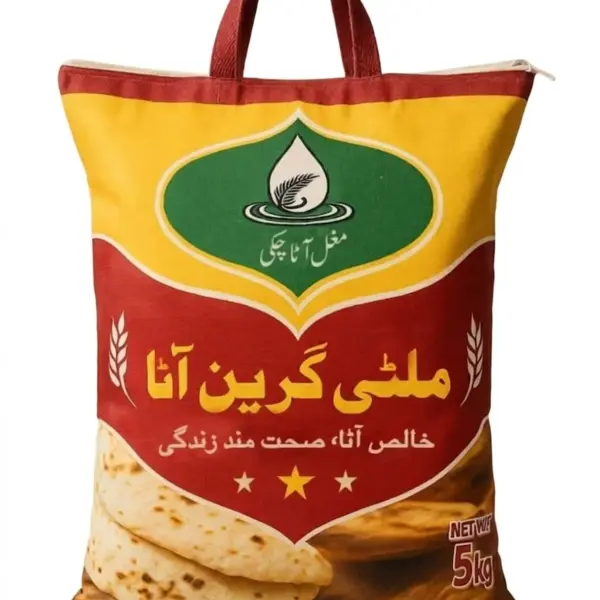
Walk through any grocery store in Karachi or Lahore and you will find at least three or four products with some variation of "sugar free" on the packaging. Some are labelled "Sugar Free Atta." Some say "Low Sugar Chakki Flour." A few go further and print "Diabetic Formula Atta" across the front in bold type. All of them are making a promise about your blood sugar. Very few of them are keeping it.
This article exists because the term "sugar free atta in Pakistan" has become one of the most searched — and most misleading — queries in the Pakistani grocery space. Families managing diabetes are spending PKR 1,200 to PKR 2,500 on products they believe will protect their blood sugar, and many of those products are delivering the same glucose spike as standard wheat atta. The marketing is different. The metabolic outcome is the same.
We are going to fix that. This guide will tell you exactly what sugar free atta means clinically, what it means legally (which is almost nothing), which flour genuinely performs in blood glucose management, what a realistic sugar free atta price in Pakistan looks like, and how to never be misled by packaging again.
|
🧮 KNOW YOUR BASELINE FIRST Before switching any flour, establish your current blood glucose baseline and BMI. Zarfoni's free Health Calculator takes under two minutes and gives you a diabetes risk score to track against over time. |
1. Does Atta Have Sugar? The Honest Answer
This is the question behind every "sugar free atta" search, and the answer requires a distinction most packaging does not make.
Does atta contain added sugar? No. Standard wheat atta — chakki-ground or otherwise — does not contain added sugar. In that narrow sense, all plain atta is "sugar free."
Does atta behave like sugar in the body? Yes, to a significant degree. Wheat starch is broken down into glucose during digestion with considerable speed. Standard wheat atta has a Glycemic Index (GI) of 62–70, meaning it causes a moderate-to-high blood glucose rise within 30–60 minutes of eating. For a person managing Type 2 diabetes or insulin resistance, this is functionally similar to consuming sugar — not because the flour contains glucose, but because it converts into glucose rapidly in the gut.
This is the gap that "sugar free atta" marketing exploits. The claim is technically accurate — there is no sucrose or fructose in the flour — but it is metabolically misleading for anyone using the term to mean "safe for my blood sugar."
| Flour Type | Contains Added Sugar? | GI Score | Blood Sugar Impact |
|---|---|---|---|
| Refined Maida | No | 85 | ❌ Very High spike |
| Standard Wheat Atta | No | 62–70 | ⚠️ Moderate-high spike |
| Most "Sugar Free Atta" brands | No | 55–65* | ⚠️ Still problematic |
| Zarfoni 15-Grain Wheat-Free Atta | No | ~32–38 | ✅ Low — safe for sugar patients |
*Estimated range for commercially available "sugar free atta" products. Most do not publish verified GI scores.
|
⚠️ THE LABEL GAP Pakistan's food regulatory framework (PSQCA) does not require flour brands to publish Glycemic Index data. A product can legally print "Sugar Free" on the front while containing a GI of 65 — because "sugar free" only means no added sucrose. It says nothing about the starch conversion rate. This is why GI is the only number that matters for a diabetic patient evaluating atta. |
2. What "Sugar Free Atta" Actually Means — and What It Doesn't
In the Pakistani grocery market, "sugar free atta" effectively means one of three things, depending on the brand:
🔴 Type 1 — Just no added sugar (misleading): Standard wheat atta with no added sweeteners. No meaningful change to the GI. These products capitalise on the label without changing the formulation. You pay a premium; your blood sugar does not notice the difference.
🟡 Type 2 — Wheat base with some low-GI additions (partial): Standard wheat atta with token amounts of barley, oats, or chickpea flour added. The GI is marginally lower — perhaps 55–62 — but wheat remains the dominant component, setting a floor above the clinically useful threshold. This is the most common "multigrain" product in Pakistan's mainstream grocery sector.
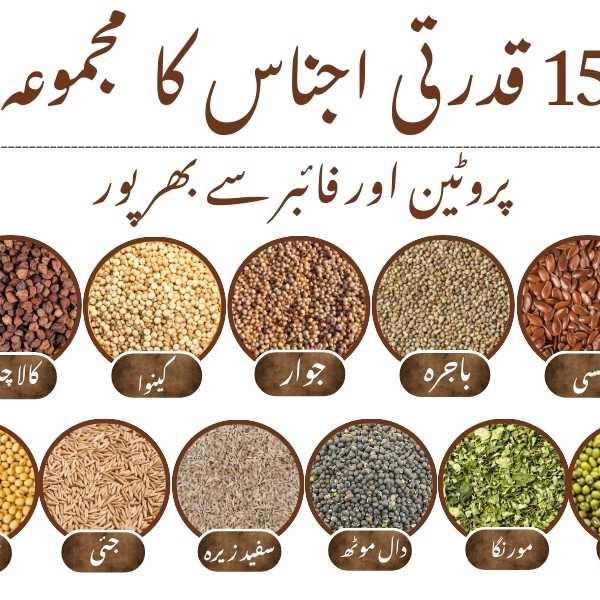
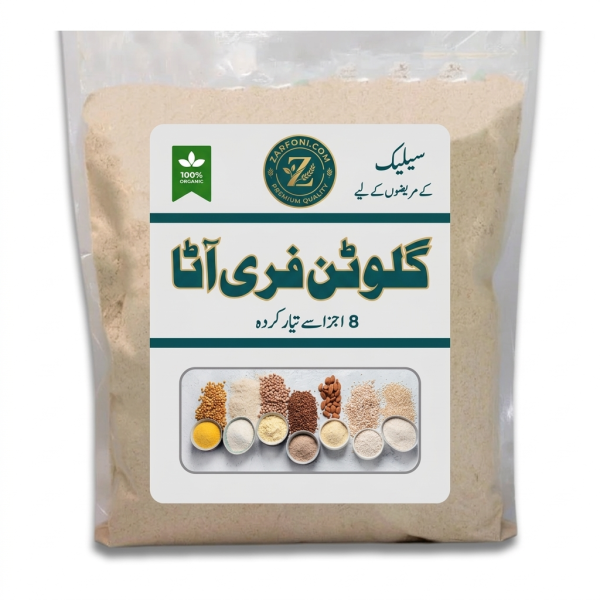
🟢 Type 3 — Wheat-free, low-GI, multi-component blend (genuine): A flour blend where wheat is entirely replaced by low-GI grains — barley, sorghum, pearl millet, black chickpeas — and further enhanced with functional seeds and fibers like psyllium husk, flaxseeds, and kalonji. The GI drops to 32–42. This is what "sugar free atta" should mean for a diabetic patient — and it is what Zarfoni's 15-Grain Atta by Mughal Natural Foods delivers.
The market is dominated by Types 1 and 2. Type 3 products are available but rare, and they require specific knowledge to identify because few brands publish verified GI scores.
3. Which Flour Is Sugar Free in Pakistan?
Every plain flour is "sugar free" in the sense of containing no added sugar. But the question diabetic patients are actually asking is: which flour produces the lowest post-meal blood glucose response?
The answer, for a flour that can be used to make roti as your daily staple, is a wheat-free multigrain blend dominated by barley, legumes, and high-fiber seeds. Here is a performance ranking of commonly available flours in Pakistan by their actual blood sugar impact:
| Flour | GI | Available in Pakistan? | Practical Limitation |
|---|---|---|---|
| Psyllium Husk (Isabgol) | <5 | ✅ Yes | Cannot be used alone — must be blended |
| Soyabean Flour | 15 | ✅ Limited | Strong flavour; cannot exceed 15% in roti blend |
| Barley Flour (Jau ka Atta) | 28 | ✅ Yes — Zarfoni | Dense roti; best blended at 30–40% |
| Black Chickpea Flour (Kala Chana) | 28 | ✅ Yes — Zarfoni | Slightly bitter at high ratios; max 20% in blend |
| Buckwheat Flour | 49 | ⚠️ Hard to find pure | Often adulterated with wheat in Pakistan market |
| Zarfoni 15-Grain Blend | ~32–38 | ✅ Yes — zarfoni.com | None — designed for daily roti use |
| Standard Wheat Atta | 62–70 | ✅ Everywhere | Too high GI for sugar patients as daily staple |
| Maida (Refined Flour) | 85 | ✅ Everywhere | Avoid entirely for diabetic management |
The practical answer to "which flour is sugar free?" for a Pakistani family eating roti daily is: a 100% wheat-free blend of barley, legumes, millets, and high-fiber seeds — formulated specifically to produce a composite GI below 45. Single flours cannot achieve this for daily roti use because of palatability constraints. A precision-blended 15-grain product solves all three variables simultaneously: low GI, roti-workable texture, and complete nutrition.
|
⚖️ HIGH BMI = HIGH DIABETES RISK IN PAKISTAN South Asian adults develop insulin resistance at BMI 23 — lower than Western benchmarks. If your BMI is 23 or above, the GI of your daily atta is a clinically meaningful dietary variable. Check your risk score free. |
4. Sugar Free Atta Ingredients: What to Look For
The ingredients list on a genuine sugar-control flour should answer three questions immediately: Is wheat absent? Are low-GI grains dominant? Are functional seeds and fibers present?
Here is what a credible sugar free atta ingredients list looks like — and what each component contributes:
| Ingredient Category | What to Look For | What to Avoid |
|---|---|---|
| Base grain (35–50%) | Barley (jau), Pearl Millet (bajra), Sorghum (jowar) — all GI below 55 | Wheat as first ingredient — immediately raises the effective GI above 60 |
| Protein source (12–20%) | Black chickpeas (kala chana), Soyabean, Amaranth — provide protein buffering | No protein component = no gastric emptying delay = faster glucose spike |
| Soluble fiber (6–10%) | Psyllium Husk (isabgol), Flaxseeds (alsi) — gel matrix slows absorption | Absent or below 5% — the GI-lowering mechanism is incomplete without this |
| Functional seeds (3–8%) | Kalonji (thymoquinone for beta cell support), Flaxseeds (Omega-3 for inflammation) | Purely decorative seed additions below 1% have no metabolic effect |
| Secondary grains (10–20%) | Buckwheat, Brown Rice, Quinoa, Finger Millet (Ragi) — add micronutrients and alpha-amylase inhibition | Maize or rice as dominant secondary grain raises the GI of the blend |
| Additives | None. Zero preservatives, zero artificial flavours, zero bleaching agents | Any preservatives, anti-caking agents, or "flour treatment agents" indicate industrial processing that compromises fiber integrity |
Zarfoni's 15-Grain Atta by Mughal Natural Foods contains: Barley, Oats, Sorghum, Pearl Millet, Black Chickpeas, Finger Millet, Buckwheat, Soyabean, Flaxseeds, Psyllium Husk, Amaranth, Maize, Brown Rice, Quinoa, and Kalonji. Zero wheat. Zero preservatives. Zero additives. Cold-milled to preserve all bioactive compounds.
5. Sugar Free Atta Price in Pakistan — A Realistic Breakdown
The most common question after "which atta is best" is always: what should I actually expect to pay? Here is an honest market breakdown for 2026 pricing:
| Product Type | Price per kg (PKR) | Actual GI | Value Assessment |
|---|---|---|---|
| Standard "wheat-base + 2–3 grains" multigrain | PKR 180–280/kg | 55–65 | ❌ Poor — marginal GI improvement, high marketing markup |
| Pharmacy "diabetic atta" (branded) | PKR 400–650/kg | 50–60* | ⚠️ Mediocre — expensive for limited clinical benefit |
| DIY 5-grain home blend (sourced separately) | PKR 744/kg | 42–48 | ⚠️ Moderate — good GI but inconsistent milling and high time cost |
| Zarfoni 15-Grain Wheat-Free Atta | PKR 600/kg | ~32–38 | ✅ Best value — lowest GI at lowest cost per kg vs. alternatives |
*GI estimates for pharmacy "diabetic atta" brands are based on ingredient analysis; most do not publish verified composite GI figures. Zarfoni 15-Grain price calculated at PKR 1,499 per 2.5 kg pack.
|
💰 PRICE REALITY CHECK A family of four consuming 2.5 kg of atta per month pays PKR 1,499 for Zarfoni's 15-grain blend — less than the monthly cost of a single oral hypoglycemic medication (typically PKR 1,800–3,500). The flour works preventively; the medication manages the consequences of not switching. Most families that switch cite the medication cost comparison as the clearest argument for premium atta. |
6. How to Make Sugar Free Atta at Home — And Why Most People Stop
Searching for how to make sugar free atta is one of the most honest searches in this category. It signals the right impulse: control what goes into your flour. The challenge is that "sugar free" in the meaningful sense requires a combination of ingredients that interact — not just one or two add-ons to a wheat base.
A functional home recipe targeting GI below 50 requires, at minimum:
- Barley (jau) — 30–35%: The beta-glucan backbone of any serious sugar-control blend
- Pearl Millet (bajra) — 20–25%: Bulk, magnesium, and iron
- Sorghum (jowar) — 15–20%: Antioxidants and insoluble fiber
- Black Chickpeas (kala chana) — 12–15%: Protein buffering for gastric delay
- Psyllium Husk (isabgol) — 7–10%: The gel-forming GI anchor — without this, the blend cannot go below GI 50
Each ingredient must be sourced separately, verified for purity, sun-dried, weighed to within 5% accuracy, and cold-milled (not at a standard high-RPM chakki, which generates enough heat to destroy the beta-glucan and isabgol mucilage that make the formula work). This is achievable — but it requires approximately 3–4 hours per month and specialist milling access that most urban Pakistani families in Karachi and Lahore do not have.
The more detailed analysis of this, including a full cost comparison and the seven variables that most home blenders get wrong, is in our Day 3 guide: "The Perfect Multi Grain Atta Ratio."
7. The Zarfoni Verdict — What You Should Actually Buy
After reading everything above, the purchasing decision is relatively clear. If you are a sugar patient in Pakistan looking for the most reliable daily flour for blood glucose management, the criteria are:
- 100% wheat-free — wheat sets a GI floor above what diabetics need
- Verified low GI (below 45 composite) — not just "lower than wheat"
- Cold-milled — heat-milling destroys the bioactive compounds that make the blend work
- Lab-tested for purity — no filler grains, no undisclosed wheat
- Priced honestly — genuine quality at or below PKR 700/kg
One product in Pakistan's current market meets all five criteria: Zarfoni's 15-Grain Wheat-Free Multigrain Atta by Mughal Natural Foods.
|
ZARFONI × MUGHAL NATURAL FOODS 15-Grain Wheat-Free Multigrain Atta Pakistan's only 15-grain, 100% wheat-free, cold-milled sugar-control flour GI ~32–38 · Lab-Tested · Zero Wheat · Zero Preservatives · Delivered in 48–72 hrs |
8. Frequently Asked Questions
Is sugar free atta really sugar free?
Technically yes — no added sucrose or fructose. But for diabetics, "sugar free" is misleading if the flour still has a high GI. Most commercial "sugar free atta" products use wheat as the base grain (GI 62–70), which converts rapidly to glucose after eating. A genuinely low-GI wheat-free multigrain blend is what sugar patients actually need — not just an absence of added sugar.
What is the price of sugar free atta in Pakistan?
Genuine low-GI sugar-control atta ranges from PKR 550–700 per kg in Pakistan for quality-sourced, cold-milled products. Zarfoni's 15-grain blend is PKR 1,499 for 2.5 kg (PKR 600/kg) — one of the most cost-effective options relative to the clinical benefit it delivers. Cheaper "sugar free" labels under PKR 300/kg are typically wheat-base products with minimal glycemic benefit.
Which atta is best for sugar patients in Pakistan?
The best atta for sugar patients in Pakistan is a 100% wheat-free blend dominated by low-GI grains — Barley (GI 28), Black Chickpeas (GI 28), and Psyllium Husk (GI <5). Zarfoni's 15-Grain Chakki Atta by Mughal Natural Foods achieves an estimated composite GI of 32–38, making it the lowest-GI roti flour currently available for purchase in Pakistan.
Does sugar free atta taste different?
Yes — a genuine wheat-free multigrain atta has an earthier, slightly denser flavour than standard atta. The roti is more filling and has a nuttier taste from the barley, millet, and buckwheat. Most families adapt within 1–2 weeks. A transition tip: blend 50% Zarfoni 15-grain with your current atta in week 1, then move to 100% by week 3.
Can I use sugar free atta for paratha and chapati, not just roti?
Yes. Zarfoni's 15-grain blend works for roti, chapati, paratha, and thepla. Add slightly more water than you would for standard atta (the fiber content absorbs more liquid) and use warm — not cold — water for kneading. For parathas, an extra teaspoon of ghee in the dough helps compensate for the absence of wheat gluten's natural pliability.
How long does sugar free atta last after opening?
Zarfoni's 15-grain atta in its sealed Forest Gold packaging has a 90-day shelf life from milling. Once opened, consume within 3–4 weeks and store in an airtight container in a cool, dry place — or refrigerate in summer months. The high fiber and seed content (particularly flaxseeds) means it goes rancid faster than plain wheat flour if left in heat.
🌾 Order 15-Grain Atta · 🧮 Health Calculator · Jo ka Atta (Barley) · Kala Chana Atta · All Flours
— Published by Zarfoni.com — Authorised Distributor of Mughal Natural Foods —
📞 03144327451 · support@zarfoni.com
For educational purposes only. Not medical advice. Consult your endocrinologist before making significant dietary changes.